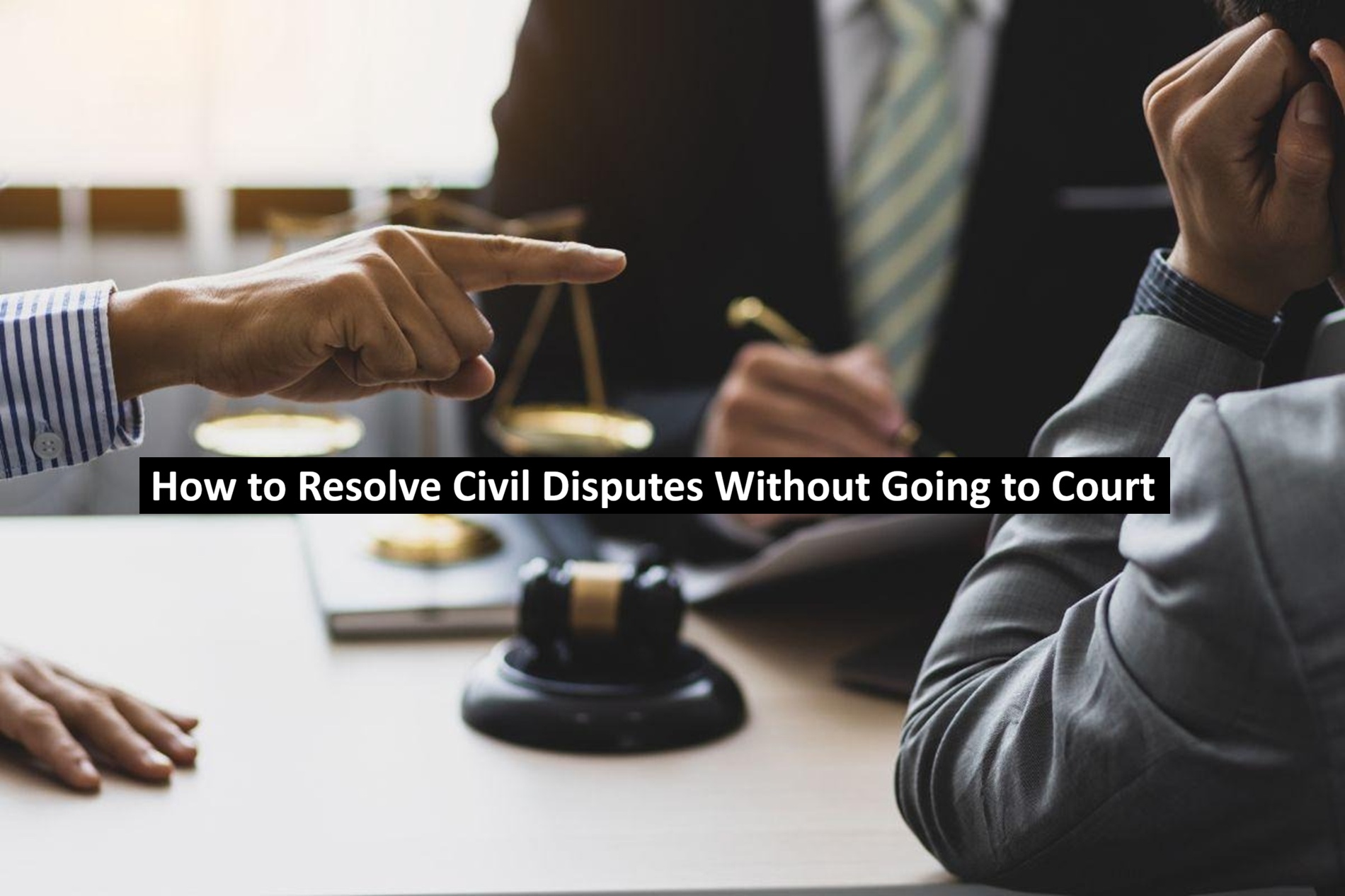
Civil disputes can arise from variety of situations such as, in relation to any contract dispute, business matter, land ownership issues, disputes in employment and any family conflict. Disputes may ultimately need to proceed to the Court although litigation costs may exceed other dispute resolution processes and be personally painful. Alternative dispute resolution could assist in finding more cost efficient or personally suitable settlement of a claim while at the same time maintaining and safeguarding business, personal or professional relationships.
Alternative dispute resolution (ADR) methods have become increasingly popular because they provide flexible solutions without requiring a lengthy court process. By understanding the available options, individuals and businesses can choose the approach that best fits their circumstances.
Start with Direct Negotiation
The most obvious way to resolve a large number of civil dispute issues is through direct negotiation. Both parties have a say; the issues are aired and are jointly tackled to provide a solution acceptable to both sides. Open negotiation can usually reduce misunderstandings before they reach dispute stage.
Effective negotiation necessitates patience, listening attentively to all concerns and expressing your point clearly while remaining open to reasonable compromise. Maintain notes of any verbal and written proposals, and keep them safe to preclude later misunderstanding.
Read: Why do We Require Open Legitimate Education
Consider Mediation
Mediation requires use of aneutral third party to bring both people together to discuss issues and find solutions to problems. Unlike a judge who can force everyone to follow their ruling the mediator assist both parties toward voluntary solution that they can BOTH accept and live with .
Commonly, mediation is used for family matters, workplace problems, commercial disputes and neighbourhood problems. It is generally cheaper, quicker and a less formal method than court.
When Arbitration Is Appropriate
Arbitration Arbitration is also a popular alternative to the courtroom, and involves an impartial arbitrator hear both cases and evidence, making his or her decision. Depending on what agreements the parties made, they can take this decision to court to get enforced.
They most frequently contain arbitration clauses as arbitration can be much quicker and a lot less visible that litigation process through the courts.
Gather Strong Documentation
Good record-keeping is vital when settling disputes through negotiation, mediation, or arbitration. Support your position and minimize conflicts with contracts, invoices, e-mails, receipts, photos, accounting records, and written correspondence.
When the evidence is structured it lets all concerned parties to asses strengths and weaknesses of its claims. As a result they are now able in position to determine if legal measures is the ideal method going ahead.
Seek Legal Advice Early
Before the situation intensifies, you might benefit by discussing it with a legal expert, so you’re fully aware of your options and your legal rights. Your lawyer will be able to examine the contract as well as clarify the details of any legal terms that apply to you. In most cases, he/she will tell you what’s the ideal way to address your dispute.
Early legal advice not only prevents potential costly errors but may increase the possibility of obtaining an equitable out-of-court resolution.
Preserve Professional Relationships
One of the advantages of resolving a legal case outside of the courtroom is maintaining beneficial relationships. Business partners, employers, employees, landlords, and tenants can commonly continue doing business with each other after a favorable alternative dispute resolution agreement.
With regard to resolving disputes – be it between two neighbours, for example, whether one of them thinks they are legally entitled to do whatever they like and the other feels he/she isn’t allowed to, or be it a more significant commercial dispute – it’s a reasonable statement that well-handled dialogue and consideration of the opposing view will usually result in better resolutions than a hostile lawsuit.
Know When Court Becomes Necessary
The majority of cases can be settled out of court. On the other hand, if it was fraud committed; it was a major violation of the contractual agreements of your business; a person contests property rights; there was significant financial harm; cooperation from another party was not met; and the matter could not otherwise be resolved, then having court intervention might be necessary for safeguarding legal rights.
Learning torecognize when further negotiation isn’t feasible saves clients time and money on pursuing other legal remedies that simply weren’t an option if they’d continued the unsuccessful process of mediation.
Benefits of Alternative Dispute Resolution
There are a number of key advantages of using ADR over standard litigation, which includes: It tends to be cheaper and less stressful It is also a much quicker alternative to going to court. In many forms of ADR, issues may also be heard in a confidential forum in order to protect the business interests and privacy of the people involved.
The adaptability of ADR also means parties are free to explore innovative solutions that wouldn’t be feasible in a judicial decision, often producing outcomes better tailored to the desires of all concerned.
Some of the key benefits that ADR processes hold over traditional litigation are that they are relatively inexpensive, less stressful to be a party to, and much speedier than the court process. Understanding why we require open legitimate education also helps individuals make informed Both legal and personal issues by increasing knowledge of rights, responsibilities and fair conflict resolution procedures. Its flexibility permits parties to design practical solutions while maintaining good relationships.
Future Outlook
With legal systems being focused on efficient dispute resolution methods, alternative dispute resolution solutions have witnessed increasing adoption across various sectors. Whether digital mediation platforms, virtual arbitration hearings or online dispute resolution services, legal support now accessible to every business and individual across the globe.
Through negotiation, mediation, arbitration and the benefit of early legal advice, all individuals may be able to resolve a civil action without the assistance of court. Selecting appropriate dispute resolution at an opportune moment may conserve costs, alleviate stress and engender a fair resolution while maintaining existing relationships.
Author’s Bio:
Lalit is a freelance content writer, blogger, and digital marketer with 6 years of experience. He writes clear, engaging content on law enforcement software market, SEO, technology, business, education, and market trends, making complex topics easy to understand and apply.